

Child, Family & Adult Therapy · Stamford, CT

A steady, compassionate place to work through life's challenges.

Play and art therapy for children. Trauma-informed care for adults navigating anxiety, depression, and life transitions. Compassionate support for parents and families.

Prefer to talk? Call (203) 515-7227

About Me

Medina Cecunjanin, LCSW

Meet your therapist

Welcome. As a child and family therapist, I'm dedicated to providing a safe, supportive space for you to explore and overcome obstacles. With a trauma-informed approach, I understand the impact of adverse experiences on individuals and relationships. My expertise is in using play and art therapy to help young people develop social and emotional skills, address learning and behavioral challenges, and improve their self-esteem and relationships.

For adults, I offer a unique blend of support and guidance to help you manage anxiety, depression, and stress. Together, we'll work towards making courageous changes to empower you to live a more fulfilling life. My goal is to provide you with a sense of hope and confidence as you navigate life's challenges.

Whether you're seeking help for yourself or your child, I'm committed to providing personalized support and care. Thank you for considering my services. I look forward to connecting with you and exploring how we can work together to create positive change.

In my work with individuals, children, parents, and families, I've built a reputation for being a trusted and compassionate guide. I offer tailored support to help you or your loved ones find clarity, confidence, and resilience.

Who I Work With

Care for every stage of the family.

Children and their caregivers are at the heart of my practice, but the work often extends to the adults who love them, and to individuals seeking their own path forward.

Toddlers through Teens

Children and teens don't always have the words to explain what they're feeling. Through play and art therapy, they can explore emotions, experiences, and relationships in ways that feel natural and meaningful to them.

  • Anxiety, big feelings, or behavioral challenges
  • Learning, social, or friendship difficulties
  • Changes, transitions, or adjustment challenges
  • Trauma or other adverse experiences

Parents & Families

Parenting can bring moments of uncertainty, conflict, and change. Therapy can help parents and families strengthen connection, improve communication, and develop new ways of responding to the challenges that arise at home.

  • Parent-child relationship work
  • Family communication and conflict
  • Parenting through transitions and change
  • Divorce, separation, and blended families
  • Child-parent psychotherapy for young children and their caregivers

Adults

Life can bring periods of stress, uncertainty, loss, and change. Individual therapy offers a supportive, thoughtful space to better understand what you're experiencing, develop new ways of coping, and move toward greater clarity and connection.

  • Anxiety, depression, and stress
  • Life transitions and major changes
  • Grief, loss, and adjustment
  • Self-esteem and relationships

How I Work

A gentle, grounded way in.

My approach is grounded in humanistic and trauma-informed therapy, recognizing that each person brings their own story, strengths, and needs.

At the heart of my work is the therapeutic relationship. I draw from the approaches below, weaving them into our work to support growth and progress.

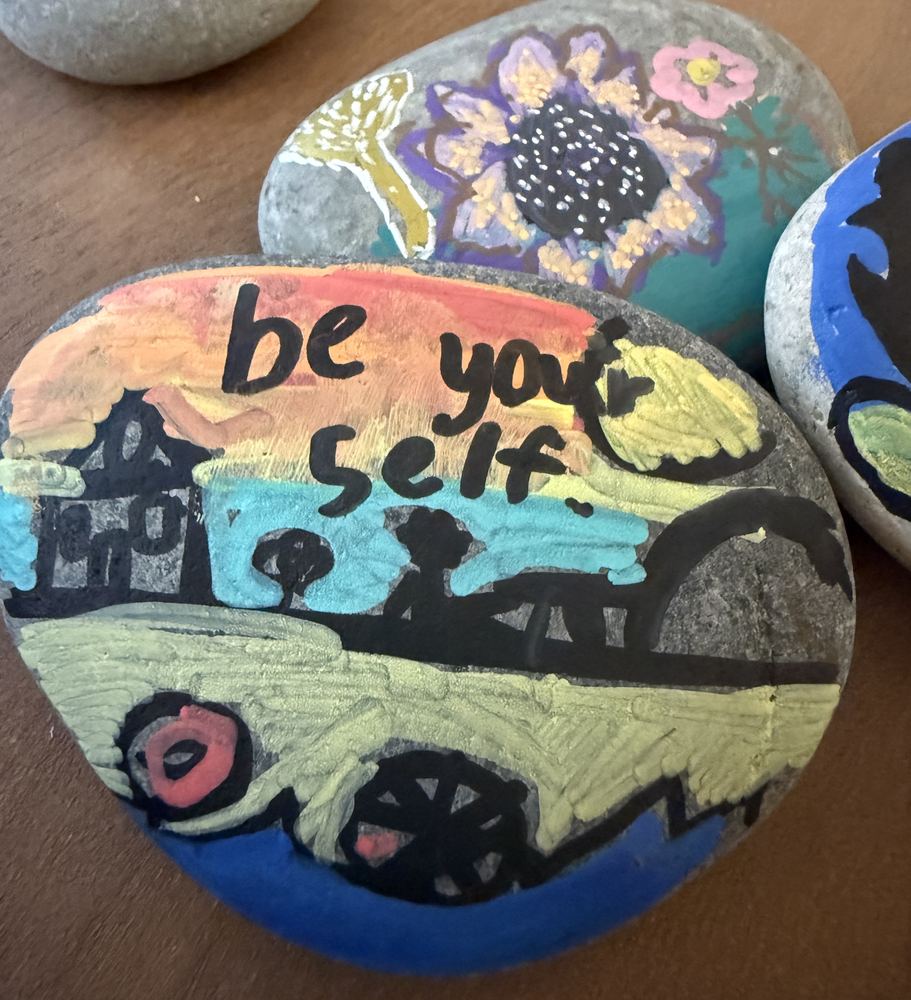
Painted rocks with encouraging messages — art used in therapy sessions

treatment approach

Therapeutic approaches I draw from

I draw from a variety of evidence-based therapeutic approaches to meet each client's unique needs. Click on any approach to learn more.

For Children & Families

Play Therapy

Play therapy is a developmentally appropriate approach for children ages 3–11 that uses play as a natural way to communicate, express emotions, and work through difficult experiences. Because children often communicate through play before they have the words to fully describe their thoughts and feelings, play can offer meaningful insight into their inner world. Through toys, games, creative activities, and imaginative play, children can explore emotions, develop coping and regulation skills, and process experiences in a way that feels natural and developmentally appropriate.

Art Therapy

Art therapy uses the creative process as a therapeutic tool to support emotional expression, self-understanding, and mental well-being. It can be used with both children and adults to address a range of concerns, including anxiety, depression, relationship difficulties, trauma, and loss. Through activities such as drawing, painting, and other creative forms of expression, the therapeutic process can provide opportunities to explore emotions, gain insight, develop coping skills, and work through difficult experiences. The artwork itself, as well as the process of creating it, can offer meaningful ways to understand and communicate experiences that may be difficult to express through words.

Child-Parent Psychotherapy

Child-Parent Psychotherapy is an evidence-based approach for children from birth through age five and their caregivers, designed to strengthen the parent-child relationship following stressful or traumatic experiences. CPP recognizes that young children's emotional well-being is closely connected to their relationships with their caregivers, and that healing happens within the context of a safe, responsive relationship. Treatment focuses on strengthening the caregiver-child relationship, supporting emotional regulation, and helping both child and caregiver make sense of experiences that may have disrupted their sense of safety. Through this process, caregivers develop a deeper understanding of their child's emotional and behavioral responses while building greater confidence in responding to their needs.

Relational Therapy

Family and attachment-based approaches explore how early relationships and family dynamics shape emotional development, patterns of connection, and responses to stress. Rather than focusing on one individual in isolation, this work considers the relationships, roles, and patterns within the family system. Therapy supports greater understanding and connection within relationships, helping families strengthen communication, emotional regulation, and a sense of safety while creating opportunities for healthier patterns to develop.

Family Systems

Family Systems therapists view problems within the family as the result not of particular members' behaviors, but of the family's group dynamic. The family is seen as a complex system having its own language, roles, rules, beliefs, needs and patterns. The therapist helps each individual member understand how their childhood family operated, their role in that system, and how that experience has shaped their role in the current family.

For Adults & Individual Work

Cognitive Behavioral Therapy (CBT)

Cognitive Behavioral Therapy (CBT) is an evidence-based approach that explores the connection between thoughts, emotions, and behaviors. It helps individuals identify patterns of thinking that may contribute to emotional distress and develop more balanced, effective ways of responding. CBT is typically structured and collaborative, with a focus on building practical skills that can be applied outside of therapy. It is commonly used to support concerns such as anxiety, depression, and stress.

Psychodynamic

Psychodynamic therapy is a talk-based, insight-oriented approach that uses conversation and introspection to explore how past experiences, relationships, and patterns can influence our thoughts, emotions, and behaviors in the present. Through reflection and increased self-awareness, therapy can help bring greater understanding to these patterns, work through underlying conflicts, and create new ways of relating to ourselves and others. The therapeutic relationship is also an important part of this work, providing an opportunity to explore patterns of connection and relationship as they emerge in the present.

Humanistic

The humanistic method takes a positive view of human nature and emphasizes the uniqueness of the individual. Therapists in this tradition, who are interested in exploring the nature of creativity, love, and self-actualization, help clients realize their potential through change and self-directed growth. Humanistic therapy is also an umbrella term for gestalt, client-centered therapy, and existential therapy.

Narrative

Narrative Therapy uses the client's storytelling to indicate the way they construct meaning in their lives, rather than focusing on how they communicate their problem behaviors. Narrative Therapy embraces the idea that stories actually shape our behaviors and our lives and that we become the stories we tell about ourselves. There are helpful narratives we can choose to embrace as well as unhelpful ones. Although it may sound obvious, the power of storytelling is to elevate the client, who is the authority of their narrative, rather than the therapist, as expert.

Trauma Focused

Trauma-focused therapy supports individuals in understanding and processing the impact of traumatic experiences on their emotions, relationships, behaviors, and sense of self. My approach is integrative and considers both specific traumatic experiences and the effects of complex or ongoing trauma. Therapy may focus on developing a greater sense of safety, strengthening emotional regulation and coping, and creating space to process experiences at a pace that feels manageable and supportive.

Strength-Based & Culturally Sensitive Approach

Therapy is grounded in the belief that each person brings unique strengths, experiences, values, and resources to the process of growth. A culturally sensitive perspective recognizes how culture, identity, family, and community shape the way we understand ourselves and the world around us. Together, these approaches help create a space where clients feel seen and respected, while building on their existing strengths to navigate challenges, develop resilience, and create meaningful change.

focus areas

What I help with.

specialties and expertise

Getting Started

What working together looks like.

Reaching out for the first time can feel like a lot. Here's what happens next, so nothing is a surprise.

01

Free 15-Minute Call

We'll talk briefly by phone or video about what's bringing you to therapy. You can share a little about what's going on and ask any questions you may have. There's no obligation—this is simply an opportunity for us to get a sense of whether we might be a good fit.

02

Register in the Portal

If we decide it feels like a good fit, you'll receive a secure link to my client portal to complete the intake process. Insurance information, forms, and scheduling are all conveniently managed through the portal.

03

First Session

We'll meet in person at my Stamford office or virtually through Telehealth. We'll go at your pace, taking time to get to know each other, understand what brings you to therapy, and begin shaping goals together.

04

Ongoing Work

Sessions are typically weekly or bi-weekly on weekdays, including evenings. We'll adjust the pace and approach as the work unfolds, staying responsive to your needs and goals.

Fees & Insurance

Making therapy affordable.

In-Network Insurance

I'm in-network with the plans below. If you have a plan not listed, I can provide a superbill for you to submit for out-of-network reimbursement.

  • Aetna
  • Anthem
  • ConnectiCare
  • HUSKY Health
  • Optum
  • UnitedHealthcare (UHC / UBH)

Fees & Payment

Fees are collected at the time of service. I bill insurance directly, and clients pay their copay. If insurance does not cover or approve a service, the client is responsible for the full fee. If cost is a concern, please reach out to discuss options for making therapy affordable.

Zelle
Zelle QR code — scan to pay

Testimonials

What clients say

What can I say but that finally I found a therapist that gets me and not just me but my kids as well. She gives the best advice and sources; besides the other ones I have met, Medina makes you feel comfortable and that's a plus in our family.

— M. Rosario

Medina has been helping my son and I navigate his PTSD and anxiety and it's been an incredible help and he is making so much progress! She's truly amazing and I highly recommend her!

— E. Marie

Medina has been a great help also great support for me and my family. I definitely recommend her to anyone, also she's very professional and good at her job. Thank you Medina.

— D. Moreno

Medina is amazing to work with. She dives in to find what's going on and helps solve it. She is very understanding. My previous experience talking to a therapist is like talking to a brick wall. Medina doesn't do that — she talks and makes sure you're comfortable and in a safe space.

— H. Eltoukhy

Medina helped me a lot in getting back my life again. I would refer Medina for her phenomenal expertise in counseling.

— Z. Aslam

Medina is such a kind soul. She has such a great heart and is very patient and wise. She has helped me through a lot of my social issues and constantly proves to be a great source even when the work day is done. She is very compassionate and allows you to have a meaningful conversation instead of listening and not providing feedback. I hope to continue our sessions in the future!

— G. Loiseau

Extremely proud to have been in therapy with Ms. Medina. She was very helpful, good, patient, supportive, and professional while she was working with my son's mental health and legal issues. She listened to both of us and cared about our family members. I recommend her for anyone who needs help and support. She will help you with anything you need. Please feel welcome to contact her.

— Vero R.

Medina has been an amazing resource for myself and three boys. She has a wonderful demeanor, is easy to talk to and my boys have enjoyed their time with her. Looking forward to continuing our sessions with our family.

— Lisa M.

Reflections

Notes from my practice.

Welcome. A space to pause, reflect, and share observations, experiences, and ideas—personal, professional, and everything in between. I’m glad you’re here.

September 27, 2026

What We Carry Into Autumn

What We Carry Into Autumn

This time of year has a way of asking something of us. The light fades a little earlier each evening, the air cools, and the trees begin releasing what they spent all summer growing. They don't argue with it. They simply let go of what the season no longer needs.

We rarely give ourselves that same permission. We hold on to routines that once served us, to roles we've outgrown, to conversations we keep replaying long after they've ended. Sometimes we hold on because letting go feels like failure. Other times it's because we aren't sure who we'll be without the weight.

Release rarely happens all at once. It begins quietly. A little less energy spent explaining ourselves. A little more truth in how we answer when someone asks how we are. A willingness to let a feeling be present without rushing to fix it.

Letting go isn't the same as losing. A tree isn't diminished in winter; it's conserving what matters most, trusting that its roots are still doing their work beneath the surface. Rest is not the absence of growth. More often, it's the ground that growth depends on.

This season invites gentler questions. What are you carrying that was never yours to hold? What have you outgrown, even if it once felt like home? And what might you make room for if you allowed a few things to fall away?

There's no need to have the answers yet. Sometimes noticing is the first act of care.

Contact

Ready when you are.

The next step is a brief, free phone call. New clients can register through the client portal, while returning clients can sign in to access their account.

Office
666 Glenbrook Road, Suite LLB
Stamford, CT 06906
Hours
Weekdays, including evenings · In-person & Telehealth

Get started

New patients begin with a free 15-minute call. Returning patients can sign in to the client portal to schedule, message, or review documents.

My promise to you

I value open communication and will respond to messages within one business day. If you're in crisis or need immediate support, please call or text 988 or go to your nearest emergency room.